
The Skeptic Behind the Year's Most Unsettling UAP Documentary
Yes, Virginia, there is an infowar for your mind

The first time Michael Lazovsky drove to Jeremy Corbell’s house, he expected a performance.
He had cold‑emailed the polarizing UAP (unidentified anomalous phenomena) journalist during a film school exercise. His school, the American Film Institute, required students to call three strangers every week. That call landed him a job editing Corbell’s podcast Weaponized.
Lazovsky was a horror director. He spent years learning how dread builds in the darkness, but that didn’t necessarily mean he believes in non‑human intelligence.
“I didn’t know if they were going to turn off the cameras and start laughing about all of this as if it were a joke,” says Lazovsky.
What he found instead was the opposite.
The real conversations happened after the recording stopped. Every day, members of Congress, people claiming to be from the CIA and the FBI, and agencies without names would engage Corbell and his co-host, journalist George Knapp, trying to manipulate what they reported and what they buried.
Lazovsky, still a skeptic, realized he wasn’t uncovering UAP secrets. He was documenting information warfare.
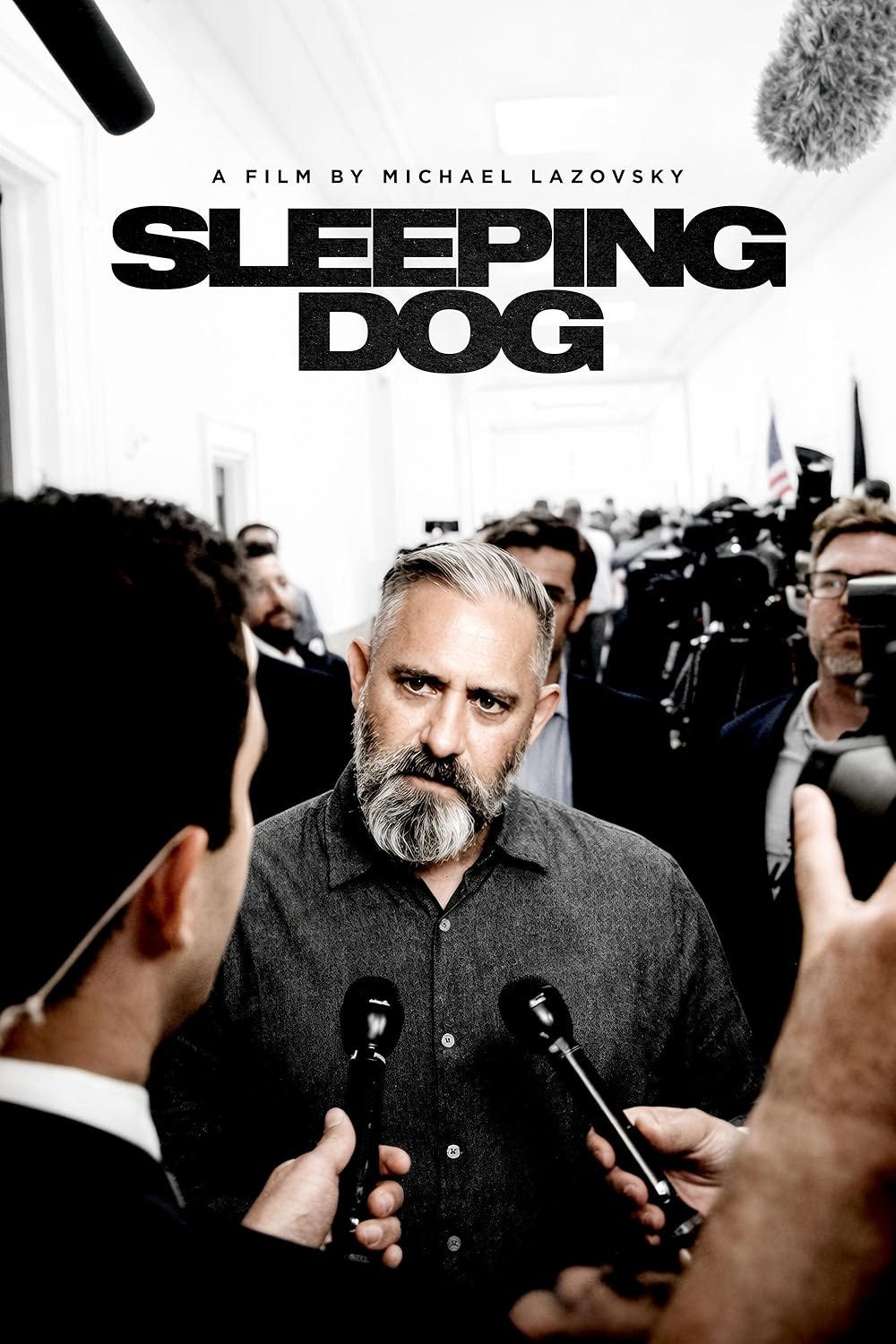
That realization became Sleeping Dog, the most unsettling documentary about the UAP phenomenon to roll out this year. Lazovsky directs, and his camera follows Corbell’s strange journey from Ju Jitsu sensei to keeper of UAP secrets.
The documentary (available to purchase on Apple TV on Tuesday, May 12) is unsettling because it isn’t primarily about unidentified objects. It’s about Corbell, a man who has spent 14 years building an archive of footage and classified documents. A man who asks himself every morning: Why haven’t they killed me?
Early in production, Lazovsky uploaded a rough cut of the documentary to Vimeo. The link was private. Corbell, who lives in Ojai, California, had not shared it widely. But when Lazovsky checked his account, he noticed two views from Washington, D.C.
“Jeremy said he hadn’t shared the film at that point except to one other person,” Lazovsky says. “It could have been a VPN thing. I don’t want to look too far into it.”
He doesn’t want to look too far into a lot of things.
When he began working with Corbell, they agreed: Lazovsky wouldn’t work on anything that could get his house raided for the safety of his family.
Corbell, by contrast, lives in a different zone. He’s been threatened. He’s been engaged on a daily basis by intelligence operatives. And he has prepared for the possibility that he will not survive.
In the film’s final act, Corbell opens his encrypted archive on camera. The folders scroll past quickly, but Lazovsky framed the shots so viewers with a pause button could read every label: Strange As Fuck, Exotics, Crystalline Structures, Kinetic Defense, Directed Disinfo, NHI Biologics.
One file stands apart: “Release After Death.dmg.”
“When Jeremy was going through the thick of it with these threats, he really thought something was going to happen,” Lazovsky says. “He texted me, and we got together, and he got me to take out my phone and record a video in the event of his passing. He told me what would have to happen.”
What couldn’t be shown may be stranger still. Whistleblowers on the Weaponized podcast regularly bring material that never airs.
“The craziest stuff is what has to be cut out,” he says. “They fear for their lives, or certain agencies say this cannot go out for whatever reason.”
One theory, repeated by “top people in government” whom Lazovsky declines to name, is that the UAP regards humans as caskets, or disposable containers for souls.
“I don’t know if I want to believe that,” Lazovsky says. “But I’m just repeating what other people have said.”
The most disturbing footage in Sleeping Dog comes from a folder on Corbell’s computer labeled “Anamorphic UAPs.” He didn’t invent the term. Lazovsky says the name comes from classified government files.
The military-shot footage shows a luminous, elongated, and human-like organism — the aforementioned Anamorphic UAP. Its body morphs, levitates at a distance, then moves to the left and flies out of frame.
“That’s the truth,” Lazovsky says. He pauses.
“I was not sure if I believed in UAPs. I still think about it every day. I believe it’s real, but I almost don’t want it to be real. It’s scary stuff. It’s like thinking about death all the time. Everyone knows death is real, but you don’t want to be thinking about it every day.”
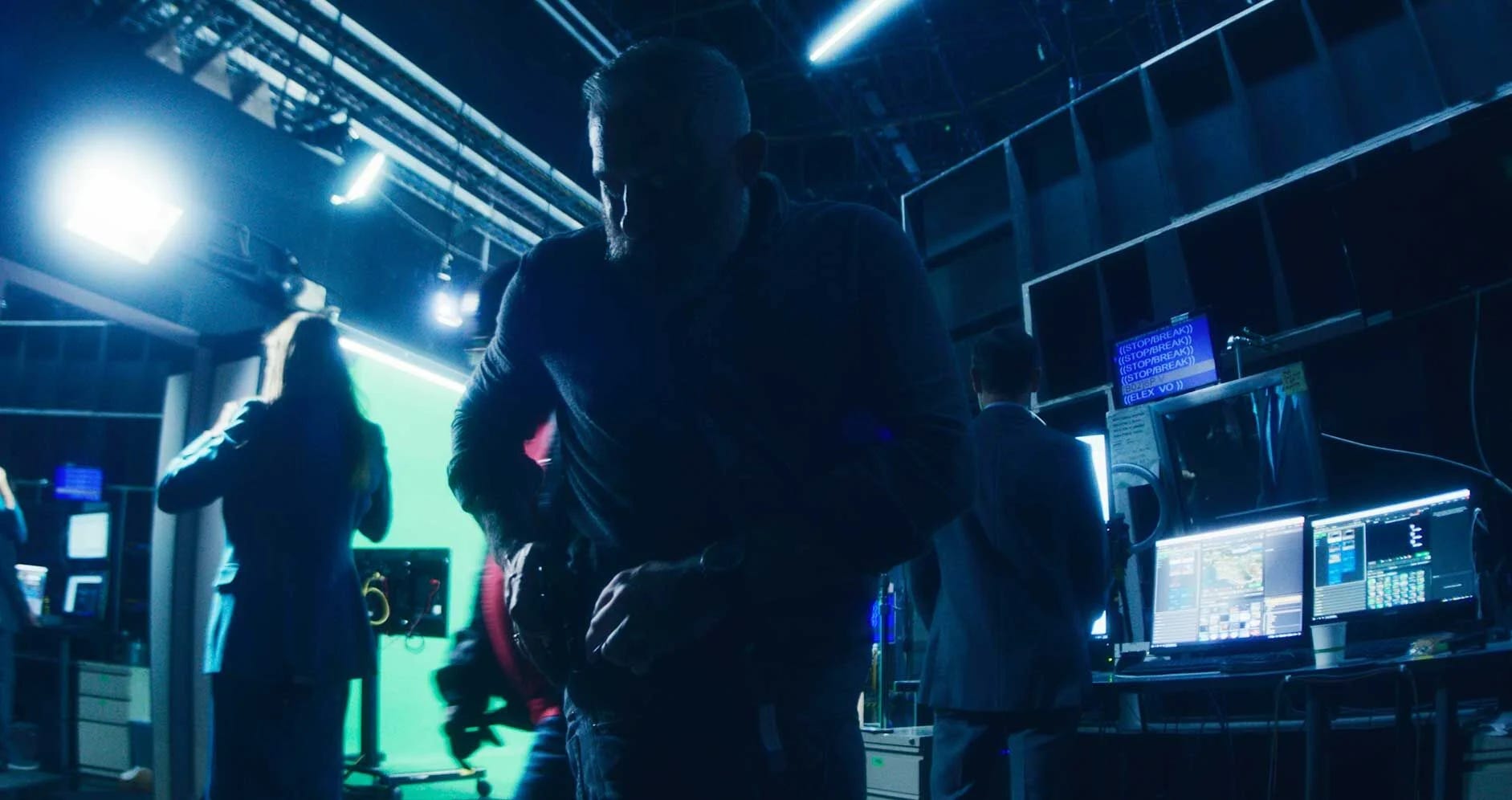
Corbell is in the middle of a slow-drip campaign, releasing footage here and there from his massive collection of UAP material. And that begs the film’s central, unanswered question: Why is Corbell still alive?
Lazovsky says intelligence agencies contact Corbell constantly.
“Some say they’re CIA, some FBI, some agencies we haven’t even heard of,” Lazovsky explains.
They try to shape his reporting. Corbell himself wonders whether he is being fed misinformation, or whether he’s a valve being used to release just enough pressure from the UAP conversation.
“They call it the hall of mirrors,” Lazovsky says. “There are elements like the FBI investigating the CIA, the CIA investigating the FBI. Jeremy might be part of that. I don’t want to go too far past what I probably should say.”
Meanwhile, a parallel story has broken into public view. Ten scientists have gone missing or died in recent years, and four of them are from New Mexico.
Air Force Major General William McCasland vanished from his Albuquerque home in February, leaving his phone behind. Two Los Alamos employees, retiree Anthony Chavez and administrative assistant Melissa Casius, and property custodian Steven Garcia from the Kansas City National Security Campus, disappeared separately.
The Atlantic recently dismissed the “missing scientists” narrative as bunk, but the FBI and Congress have launched a formal probe.
Lazovsky is careful not to connect them to Sleeping Dog.
“I don’t see the scientist’s connection yet to UAPs,” he says. “Congressman Eric Burlison named one person who did have a connection. The others? I really don’t know. Could be foreign intel.”
And yet, one document in Sleeping Dog suggests something stranger. It claims residents of area code 505 — Albuquerque, Santa Fe, Rio Rancho, Farmington — may be “symbiotically manipulated by surviving aliens.”
Lazovsky looked up the area code and linked it to “another Area 51-type place.”
He offers no further explanation. But the document lands like an unresolved blow in the story, much like the disappearances themselves.
For a moment, neither of us spoke. Then, late in our conversation, something shifted. Lazovsky asked if I had ever seen anything weird, because I had mentioned growing up near the UAP-obsessed Gulf Breeze, Florida.
I told him about my father, who died five years ago.
Dad loved Christmas, and the first holiday after he passed, my mother heard his voice coming from the Christmas tree. He said, “I love you.”
I wasn’t there, but I believe her. And unlike traditional UAP experiences, this was a benevolent encounter.
Lazovsky sat with that for a moment. “Both could be true,” he says. “There could be bad elements to this, good elements to this.
“Reality is stranger than fiction.”
He added that everyone has had a weird coincidence, like thinking of someone and then getting a call from them. “Sometimes we notice it, sometimes we don’t. That just adds to the mystery of it all.”
The conversation drifted back to the film itself.
In its finale, Sleeping Dog reveals Corbell’s lawyer is Michael Atkinson, former Inspector General of the Intelligence Community. Atkinson is the official who handled the whistleblower complaint that led to the first impeachment of Donald Trump. In his role, Atkinson had oversight responsibility for all 18 U.S. intelligence agencies.
“I think it’ll add a layer of protection for Jeremy,” Lazovsky says.
But the question remains: protection from whom?
Sleeping Dog doesn’t answer that question. Instead, the documentary makes you sit with the ambiguity. Now, the pressure is still building. The valve opens just enough. And on Corbell’s stovetop, a small magnetic UFO knick-knack spins in place.
Lazovsky knocked it over once. It made a loud, heavy sound. He put it back, and it’s still spinning. ◀
This story appears in the print and digital editions of Pasatiempo, a Santa Fe New Mexican publication.