
Inside America’s Oldest Video Store
How Video Library outlived physical media's death and leads its revival

On a Friday afternoon in Santa Fe’s historic district, a line forms at the counter of Video Library. There’s no barcode scanner, no computer logging what anyone rents. Just Lisa Harris, a stack of index cards, and 45 years of movie memories standing between the shelves and the door.
Video Library, known to regulars simply as “the Vid,” is the oldest continuously operating video rental store in America and, by Harris’ own count, the oldest still-functioning video rental store in the world.
It opened August 10, 1981, the same week MTV went on the air, in a shopping center at the corner of St. Francis Drive and Cerrillos Road.
“We are the first video store in the state,” Harris says. “And other than you were renting with money instead of borrowing it, the store was analogous to a library.”
That word, library, has aged well.
In 1981, calling it a library was a way to explain the idea of renting movies. Forty-five years and three locations later, most recently to Paseo de Peralta in 2009, Harris’ zero-tech operation reads as something closer to a promise: what’s here, stays here.
Some movies get lost in the store. The shelves are packed spine-out, in a gallery so crowded that finding a stray box can take a year. The system isn’t efficient, but Harris’ life’s work wasn’t built to be optimized. It was created — and is sustained — by the love of stories and now, for physical media.
By her own description, Video Library is built for the opposite of what streaming offers. Where a platform serves up an infinite, frictionless scroll, Harris serves up an opinion.
“I am better than any algorithm ever could be,” she says. “Once I get to know what you like, I will happily inflict my opinion upon you.”
For customers overwhelmed by her movie collection, she starts with, “Is there something specific you’re looking for?” ”What are you in the mood for tonight?” From there, she matches mood to genre.
What accounts for this longevity? At first, it was novelty. Now? Perhaps it’s that the Video Library’s catalogue is also a refuge from the slop flooding streaming platforms.
“Streaming services have definitely dumbed down,” Harris says. “They put out stuff that they figure nobody’s really going to watch. They’re going to be sitting on their phones scrolling.”
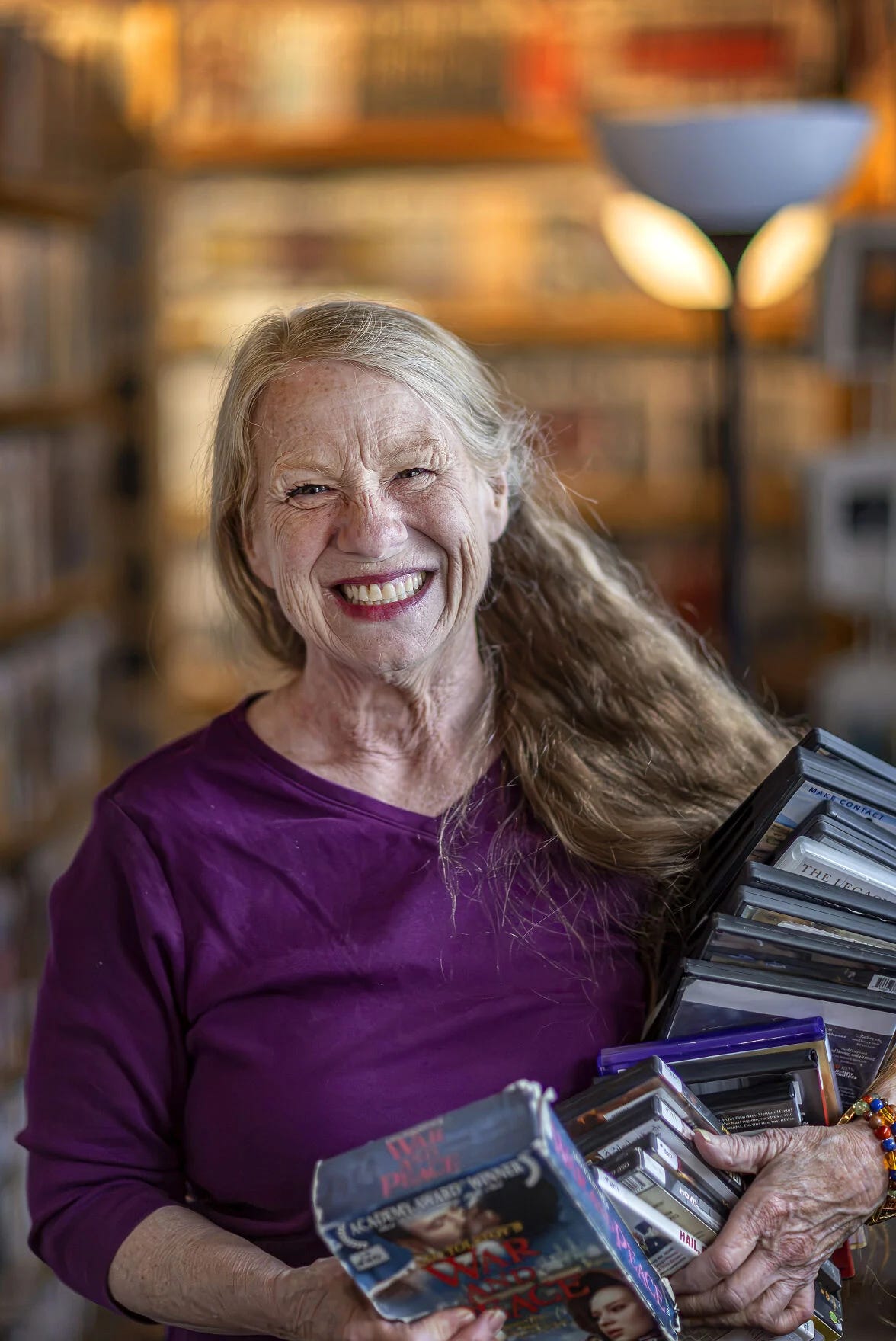
There’s another reason driving people back to physical media. Streaming platforms started slapping trigger warnings on movies, and now entire scenes are removed. Harris has heard the same story from customers more than once.
“They find out that movies are being modified on streaming,” she says. “Certain scenes are being cut out. They come back after renting the movie and go, ‘It was there. So they did mess with it.’”
Once a studio sells a disc, they can’t reach back in and change the movie.
That permanence is part of why Harris stocks out-of-print VHS titles like Pedro Almodovar’s early films, and a limited-edition, never-streaming version of Star Wars dubbed in Diné.
Ask Harris what actually keeps people coming back, though, and the answer isn’t the inventory. It’s the line.
She tells the story of two strangers who were at her store’s counter. One was guarded, but discovered they loved the same obscure film. Within minutes, they’re leaning toward each other instead of away. It happens often enough that she’s stopped being surprised by it. One customer put it plainly while waiting for Harris to buff a stack of scratched discs: “I love standing in line here because of the conversations.”
But none of this survives on nostalgia alone. Behind the community goodwill is a business still fighting to break even, helped by regulars who volunteer to restock the shelves. The Vid’s ongoing GoFundMe fundraiser helps, too.
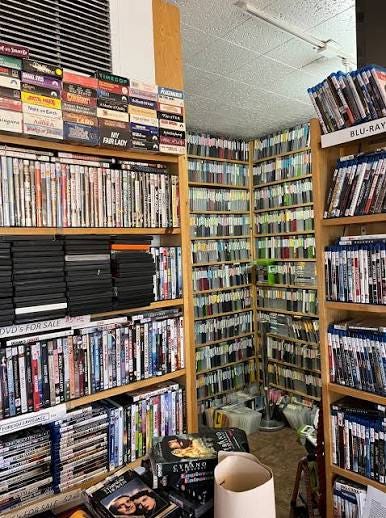
Harris credits a $2,500 disc-resurfacing machine, essentially a rock polisher for scratched DVDs, as one of the main reasons she’s still in business. She skips expensive niche movie formats like 4K, sticking instead to the formats her regulars actually own.
“I just made a deal with my husband that as long as the store breaks even, I can continue running it,” Harris says.
That pull toward community extends beyond the store itself. Every Monday night, Harris hosts a free screening at the Jean Cocteau Cinema, a routine that’s made the Vid as much a fixture there as she is behind her own counter.
This year, one of those Monday nights falls on August 10: Video Library’s 45th anniversary and Harris’ birthday. An L.A. filmmaking crew will be on-hand to screen a 25-minute cut of the documentary they’ve been shooting about the Vid since last September, followed by a screening of Harris’ own pick, Leo McCarey’s Duck Soup (1933).
Whatever the documentary finds worth capturing, it won’t be new. It’ll be the same thing Harris has been doing since 1981. And while the technology keeps changing, she hasn’t.
The counter stays put. So does the woman behind it.